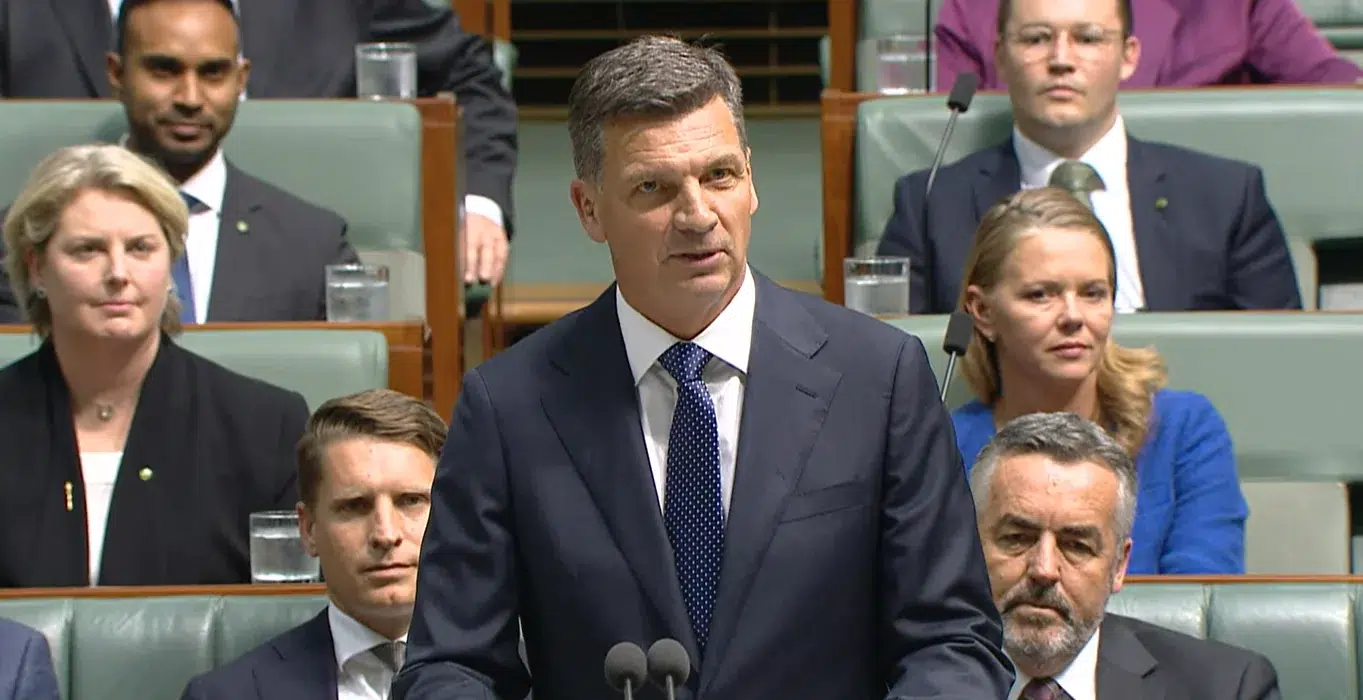
For the first time as Leader of the Opposition, the Hon Angus Taylor MP delivered his Budget Address in Reply to the Australian Parliament.
Mr Taylor’s speech focused on housing, immigration, taxation, energy, regulation and economic management as key priorities in pursuing what he described as a “freer, fairer and better Australia”.
Alongside Mr Taylor’s Budget Address in Reply, the Leader of the Nationals, Senator the Hon Matthew Canavan, delivered the Coalition’s response in the Senate, describing Labor’s Budget as one of “broken promises” and outlining a future built on Australia’s natural resources.
Nexus APAC has prepared an overview of the key themes from this evening’s Budget Address in Reply.
Response to the Budget
Mr Taylor described Labor’s Budget as an “assault on aspiration” and an act of “intergenerational fraud”, arguing that higher taxation would undermine wealth creation and constrain economic growth.
He contended that proposed changes to negative gearing, capital gains tax and small business taxation would reduce housing supply, discourage investment and place additional pressure on small businesses.
Mr Taylor further argued that the Government’s reliance on additional taxes reflected broader fiscal mismanagement, pointing to government debt approaching one trillion dollars as evidence.
Overview of the Coalition’s Economic Plan
Mr Taylor outlined a Coalition economic agenda focused on bringing down inflation and government spending, lifting private investment and productivity, and restoring affordability in housing, energy and taxation. He argued Labor’s spending, tax increases and policy choices had fuelled inflation, driven debt higher and contributed to falling living standards.
He committed a Coalition government to significant expenditure restraint, including abolishing Labor’s climate and housing agencies, ending tax concessions for electric vehicles, terminating corporate welfare, and restricting access to the NDIS and 17 welfare programs to Australian citizens. Where resource revenues exceed budget forecasts, he said 80 cents in every dollar would be quarantined in a Future Generations Fund to pay down debt and invest in nation-building infrastructure, with 25 percent allocated to regional Australia.
To support economic growth, the Coalition would permanently extend the $50,000 instant asset write-off for businesses with turnover under $10 million, abolish the Safeguard Mechanism and other net zero carbon taxes, and simplify major regulatory frameworks to encourage investment. Cost-of-living pressures would be addressed through a Tax Back Guarantee indexing income tax thresholds to inflation, while housing affordability would be supported by capping migration based on the number of homes constructed each year and investing $5 billion in enabling infrastructure to unlock up to 400,000 new homes.
Mass Migration
Mr Taylor identified mass migration as a central driver of economic and social pressures, arguing that it was changing Australia for the worse. He highlighted the gap between population growth and housing construction, which he said was eroding home ownership opportunities for Australians.
He pointed to approximately two million people being brought into Australia over Labor’s two terms, with a further 90,000 planned over the next two years. Mr Taylor also raised concerns about social cohesion, referring to what he described as a difference in values among some migrants who “want to change Australia to suit them”, citing the Bondi tragedy as an example.
Net Zero
Mr Taylor characterised Labor’s net zero agenda as a key contributor to economic and cost-of-living pressures, arguing that an excessive focus on emissions reduction had displaced what he described as “cheap, always-on power” with more expensive and less reliable renewable energy sources.
He contended that this shift had driven higher electricity prices, business closures and the offshoring of industry, while also placing upward pressure on inflation through significant public spending on net zero initiatives. Mr Taylor argued that fossil fuels continue to underpin Australia’s economic prosperity and that current policy settings were undermining energy security and competitiveness.
He outlined the Coalition’s intention to scale back or remove net zero-related policies and associated regulatory frameworks, including abolishing the Safeguard Mechanism and reducing the economic burden of the $18 billion allocated for new net zero initiatives in the Budget.
Locking Up Australia
Mr Taylor argued that Australia’s economic resilience had been weakened by an over-reliance on global supply chains and restrictions on domestic resource development. He stated that a “blind faith in globalisation” had hollowed out key industries and left Australia dependent on other countries for critical supplies such as fuel, fertiliser and industrial inputs.
He emphasised that Australia’s natural resource endowment provides an opportunity for greater self-sufficiency if governments stopped “locking up” resources and instead accelerated domestic development. Mr Taylor argued that unlocking Australia’s resources would support re-industrialisation, strengthen national resilience and underpin long-term economic prosperity.
Big Government
Mr Taylor advanced the argument that expanded government intervention had failed to deliver positive outcomes for Australians.
He cited government-led housing programs, which he claimed were resulting in 30,000 fewer homes being built each year; billions of dollars invested in what he described as “pie-in-the-sky” initiatives such as green hydrogen; childcare costs increasing by 14 per cent under government programs; and energy policies that he argued had driven power prices up by 40 per cent due to reduced reliance on coal and gas.
He contended that these policy settings had contributed to higher interest rates and declining living standards, arguing that any economic growth under Labor was largely driven by population growth rather than improvements in productivity or per-capita incomes.
A Freer Australia
Mr Taylor said Australia performs best when “everyday Aussies are empowered” and outlined his ambition to restore freedoms that he believes have been lost.
He argued that a bigger government does not equate to a better government, asserting instead that effective government focuses on getting the fundamentals right and placing trust back in the Australian people. Mr Taylor stated that a Coalition government would remove what he described as “Labor’s toxic taxes”, end mass migration and scrap Labor’s net zero policies.
He argued that expanding individual choice would restore Australia’s standard of living and protect its way of life.
Bringing Down Debt
Mr Taylor argued that reducing government spending is essential to addressing inflation, interest rates and Australia’s long-term debt trajectory, attributing fiscal pressures to sustained increases in government expenditure under Labor.
He outlined a strategy focused on expenditure restraint and reprioritisation, including making major programs such as the NDIS more sustainable, reducing or removing selected forms of government support and industry funding, and restricting welfare access for non-Australian citizens. He also proposed directing a significant share of windfall resource revenues into a Future Generations Fund to support debt reduction and long-term infrastructure investment.
Creating Investment
Mr Taylor emphasised that lifting private investment is central to restoring Australia’s economic prosperity, stating that “government doesn’t grow the economy, private enterprise does”. He argued that investment drives jobs, wages, incomes and long-term growth, and is essential to strengthening the Budget.
He announced that a Coalition government would permanently allow businesses with turnover under $10 million to immediately deduct assets of up to $50,000. He also committed to simplifying major economic legislation, including the Corporations Act, Tax Act, Competition Act, National Construction Code and EPBC Act, and requiring regulators to prioritise competition, productivity, wages and investment.
Inflation Indexation
Mr Taylor tapped into cost-of-living pressures, arguing that while inflation erodes real incomes, bracket creep has resulted in Australians paying higher taxes.
He announced a proposed “generational tax reform” in the form of a Tax Back Guarantee, under which the bottom two income tax thresholds would be indexed to inflation from 2028–29, with the top two thresholds indexed from 2031–32. The proposal is intended to fully protect all income earners from the effects of inflation over time.
Mr Taylor challenged the Government, arguing that any decision to increase taxes should be taken openly to voters at an election.
More Houses by Cutting Immigration
Mr Taylor said he wanted to re-establish home ownership as the pinnacle of the Australian dream by increasing housing supply and improving opportunities for younger Australians.
He committed the Coalition to investing $5 billion to unlock up to 400,000 new homes and to cutting red tape to reduce housing construction costs by up to $70,000. He argued that immigration levels remain too high, stating that Labor had brought in 1.4 million people—around 80 per cent of population growth over the period—contributing to a housing shortfall of homes for about 400,000 people.
Mr Taylor announced what he described as a “far-reaching and unprecedented” housing policy to cap immigration based on housing supply, ensuring no gap between migration levels and homes built. Immigration would initially sit well below the cap, with Mr Taylor arguing that setting a precise figure ahead of the election would be “rash”.
He said the Coalition would deliver one of the “biggest cuts to immigration in Australian history”, alongside lifting migration standards by making the Australian Values Statement enforceable, requiring English language proficiency for permanent visas, strengthening screening processes, and deporting 70,000 visa overstayers.
National Security and Energy Security
Mr Taylor presented national security and energy security as closely linked priorities in an increasingly uncertain global environment. He proposed developing a dedicated National Security Strategy alongside defence spending of at least three per cent of GDP, with a focus on expanding capability, including through AUKUS and advanced weapons systems.
He outlined an energy security approach focused on achieving “energy abundance”, arguing that renewables have a role but should not replace fossil fuels in the near term. Measures proposed include maintaining existing coal-fired power generation, expanding domestic fuel reserves, increasing fuel storage capacity, and accelerating approvals for major resource projects.
These measures were framed as necessary to strengthen economic resilience, reduce reliance on global supply chains, and ensure reliable access to critical energy resources.
Conclusion
The Opposition Leader concluded his Budget Address in Reply on a note of optimism. While acknowledging that the Coalition still has work to do to regain the confidence of voters, Mr Taylor outlined a vision in which Australia could restore its standard of living and safeguard its way of life.
If you have any questions or would like a briefing, please contact the Nexus APAC team.