
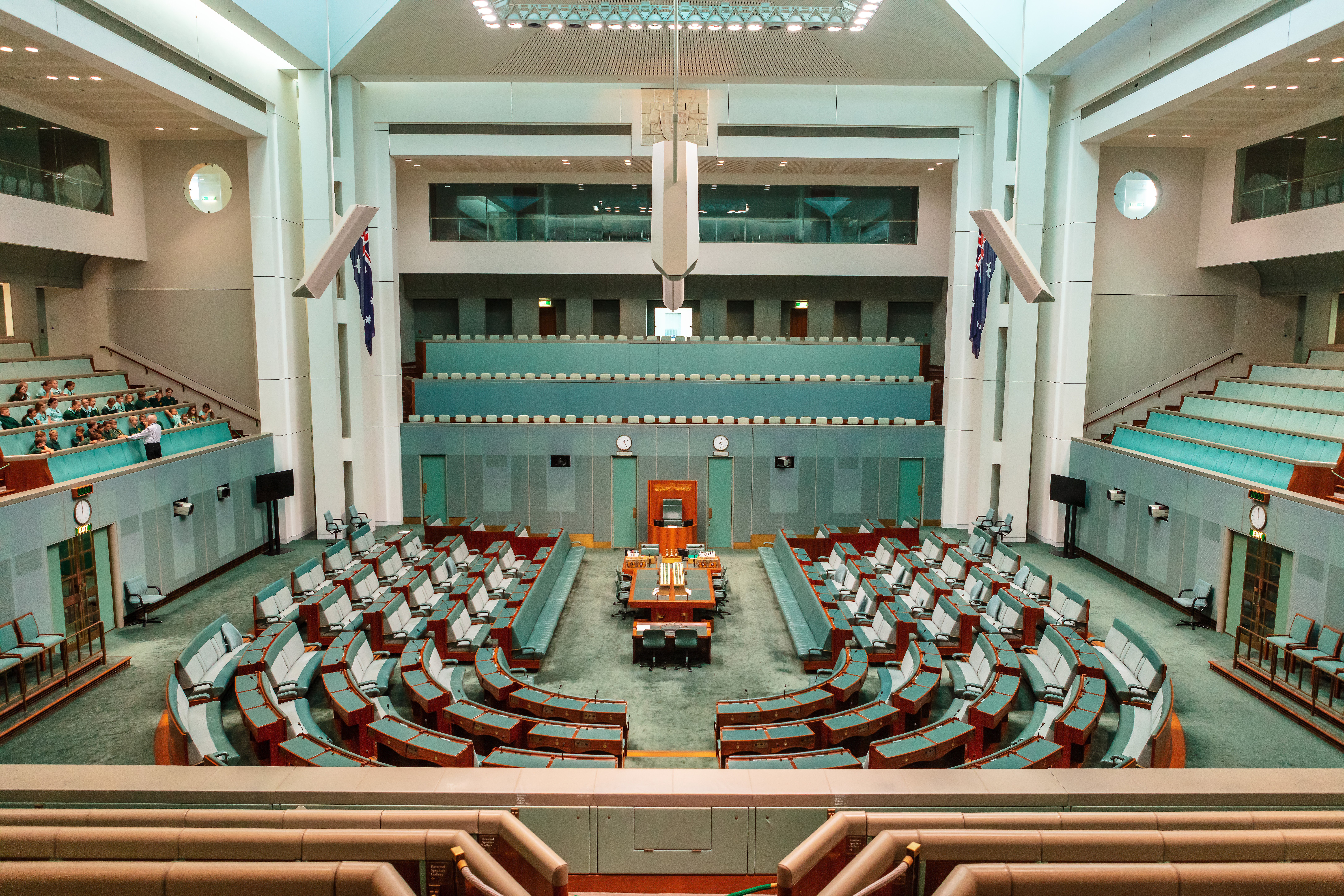
Broadcast live on sitting days, Question Time is the most visible and theatrical expression of parliamentary life. But the real engine room of the House of Representatives operates away from the cameras, in the discipline, organisation and tactical judgement required to manage the chamber during high intensity sitting weeks.
As the People’s House, the House of Representatives is where government is formed, legislation is introduced and contested, and executive action is scrutinised. With 150 electorates and an increasingly complex parliamentary landscape, the orderly conduct of business depends on rigorous management of time, procedure and political negotiation.
That responsibility sits primarily with two roles: the Leader of the House, who manages the Government’s legislative program, and the Manager of Opposition Business, who negotiates and contests how that program is prosecuted. Although one operates from the authority of government and the other from the leverage of opposition, both sit at the centre of parliamentary control. Their effectiveness depends not only on mastery of standing orders, but on judgement, credibility, and the working relationship between them.
Historically, these positions have often been entrusted to senior parliamentarians, generally loyal to the leader of the day, reflecting their political and organisational capability. The current occupants, the Hon Tony Burke MP as Leader of the House and the Hon Dan Tehan MP as Manager of Opposition Business, reflect two different approaches to parliamentary power.
Join Nexus APAC as we examine how their backgrounds shape the way the House is managed today.
Minister Burke: Leader of the House
Before entering parliament, Minister Burke studied law and arts at the University of Sydney and built a reputation as a formidable debater, winning the Martin Sorensen Trophy for Best Speaker at the 1994 Australasian Intervarsity Debating Championships. He later worked as a political staffer, union organiser and company director – experience that grounded him in internal party organisation and complex negotiation.
Minister Burke entered parliamentary life in the New South Wales Legislative Council in 2003 before being elected to the House of Representatives as the Member for Watson in 2004. Over more than two decades, he has served in multiple senior cabinet roles and, critically, spent nine years as Manager of Opposition Business from 2013 to 2022. That period provided deep exposure to the tactics, leverage points and constraints faced by an opposition seeking to influence the House.
As Leader of the House since June 2022, Minister Burke has brought that experience to bear in a way that is widely characterised as procedurally disciplined, negotiation oriented and institutionally minded.
In a Parliament with a large and assertive crossbench, Minister Burke has prioritised early engagement and sequencing, often negotiating bill timing, committee referral pathways, or amendment frameworks in advance. Rather than relying on repeated suspensions of standing orders or gag motions, this approach aims to secure consensus ahead of time, allowing complex or contested legislation to pass without excessive disruption once debate begins.
Observers also note Minister Burke’s close personal involvement in the daily management of the House. He maintains oversight of the program, intervenes directly in procedural disputes, and frames decisions in terms of precedent and institutional stability rather than partisan advantage. Motions to curtail debate are used sparingly, reinforcing his reputation as a systems manager of the House rather than a purely tactical enforcer.
This style reflects a clear philosophy of the House as an institution to be managed for legitimacy, predictability and throughput.
Mr Tehan: Manager of Opposition Business
Mr Tehan’s route to parliamentary management is different, but no less relevant to the role he now occupies.
Before entering parliament, Mr Tehan worked as a public servant and diplomat with the Department of Foreign Affairs and Trade, including a secondment to the office of Trade Minister Mark Vaile during the negotiation of the Australia–United States Free Trade Agreement. He later served as a senior adviser and chief of staff to cabinet ministers, and as Director of Trade Policy and International Affairs at the Australian Chamber of Commerce and Industry.
Elected to the House of Representatives in 2010 as the Member for Wannon, Mr Tehan accumulated substantial ministerial experience between 2016 and 2022, holding portfolios including veterans’ affairs, social services, education and trade. Of particular relevance to parliamentary management was his chairmanship of the Parliamentary Joint Committee on Intelligence and Security, a role requiring procedural rigour, disciplined process and bipartisan credibility.
Appointed Manager of Opposition Business in early 2026, Mr Tehan brought to the role a reputation for methodical preparation and strong internal standing within the Opposition.
While only having been in the role for two sitting weeks, Mr Tehan’s activities so far indicate a structured and considered approach. Rather than theatrical disruption, this appears to favour disciplined use of parliamentary mechanisms, targeted points of order, contesting timetables, and procedural challenges to apply pressure to the Government.
This reflects the structural logic of the role. Where the Leader of the House seeks flow and negotiated passage, the Manager of Opposition Business seeks to contest tempo and framing, slowing proceedings when it suits the Opposition’s objectives, forcing justification of urgency, and using process to reinforce questions of administrative competence and planning discipline.
At this early stage, Mr Tehan’s interventions have been situational and selective, aimed at isolating specific issues or ministers rather than generating broad disorder. This positions the Opposition as a disciplined alternative, an important signal in a Parliament where credibility matters as much as volume.
Two philosophies of parliamentary power
Viewed together, Minister Burke and Mr Tehan embody two distinct philosophies of how power is exercised in the House of Representatives.
Minister Burke’s approach reflects the view that the House is a system to be managed. His emphasis on early negotiation, sequencing and institutional legitimacy reflects a belief that effective government depends on predictable process and sustained relationships, particularly in a more fragmented Parliament.
At this early stage, Mr Tehan’s approach focuses more on applying pressure, creating contrast and exposing weaknesses in the Government’s management.
Both roles demand mastery of standing orders, political judgement under pressure, and authority within their respective party rooms. But the dynamic between them shapes not just the tone of Question Time, but the behind the scenes negotiations that determine whether legislation moves smoothly or becomes a procedural battleground.
For anyone engaging with Parliament, understanding that dynamic is important for understanding how decisions are really made.

Latest posts by Nexus APAC (see all)
- Labor’s National Conference: If You’re Not at the Table… - March 27, 2026
- Inside the Engine Room of Parliament: Managing the House - March 20, 2026
- Examining Medicine Shortages in Australia - February 7, 2026